

What Was Hot at NYCC 2026: Naruto, The Guy She Was Interested in Wasn’t a Guy at All, and What Live Auctions Say About How Things Sell in North America
2026.10.28
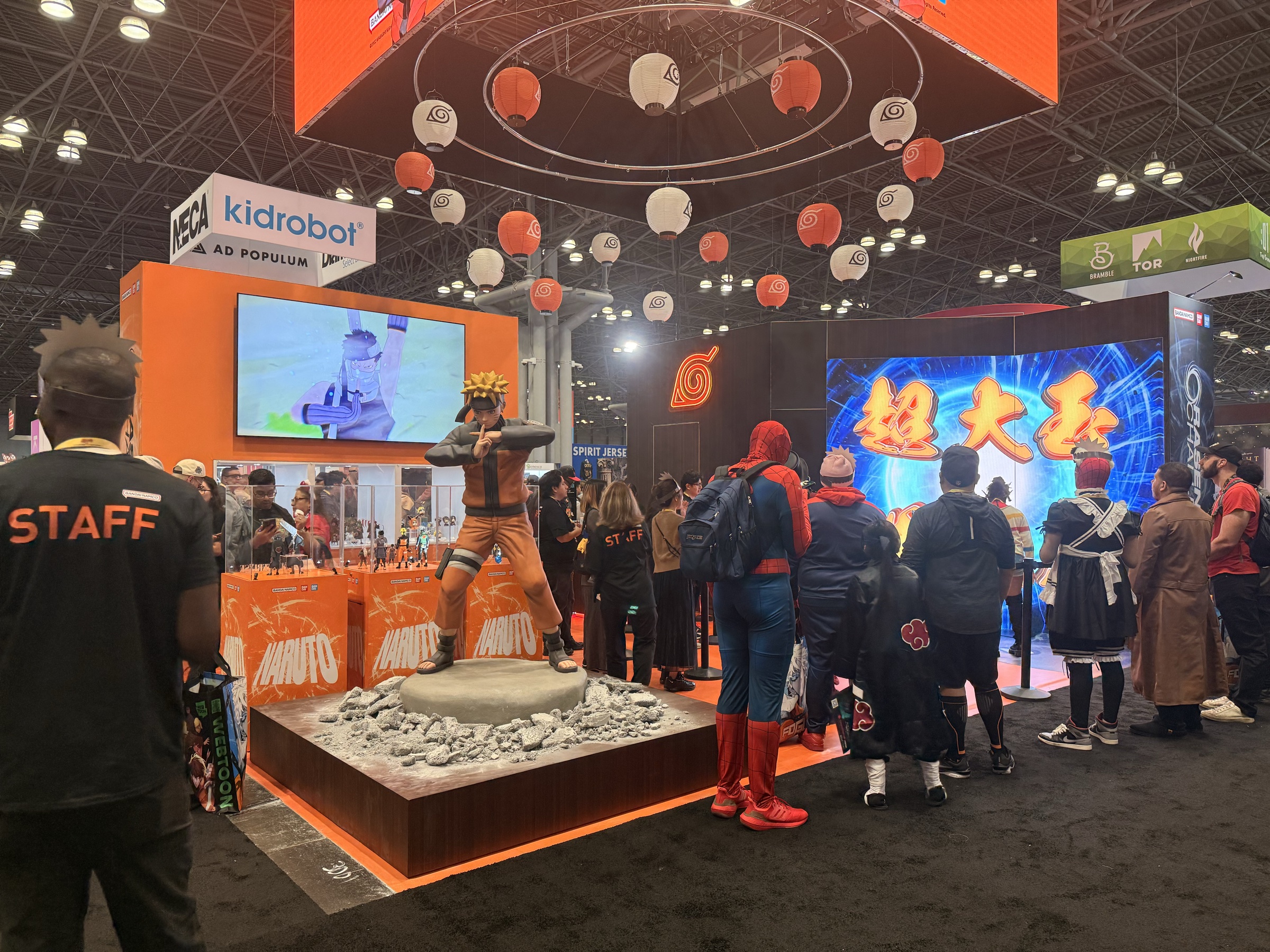
New York Comic Con (NYCC) took place in New York from October 8 to 11, 2026. With comics, film, games and anime all under one roof, how did Japanese IP land with the audience, and what did attendees spend their money and time on? Adam Graham of Helixes USA, who walked pretty much the entire show, looks at the titles that drew the biggest crowds and the sales methods you rarely see in Japan.
この記事は、日本語のものを英訳しています。→ 日本語記事はこちらから


- 01.Naruto: Fans Across Generations Filled the Hall
- 02.The Guy She Was Interested in Wasn't a Guy at All: One Line from Manga to Streaming
- 03.GUNDAM: Starting with "What is GUNDAM"
- 04.Whatnot: Live Auctions Running in the Venue and on the App at the Same Time
- 05.Selling by Designing Time and Queues
- 06.What Stood Out Compared with Japan
Naruto: Fans Across Generations Filled the Hall
Naruto, a title loved for decades, drew huge numbers of fans at this year’s NYCC too.
The “NARUTO: What’s Next?” panel, held on October 10, Naruto’s birthday, filled a room of roughly 3,000 people. It delivered a full slate of firsts: a four-episode Naruto × Ninkū crossover anime, a multiyear global roadmap called PROJECT RASENGAN, a June 2027 worldwide card game release, a global rollout of the mobile game, and a teaser for a new manga by creator Masashi Kishimoto.
Hundreds of people were turned away, and I was one of them. Afterward, I was given a novelty bag from the panel by someone involved, and as I walked the floor with it, fan after fan stopped me to ask where I got it. That’s how much interest there was in the panel.
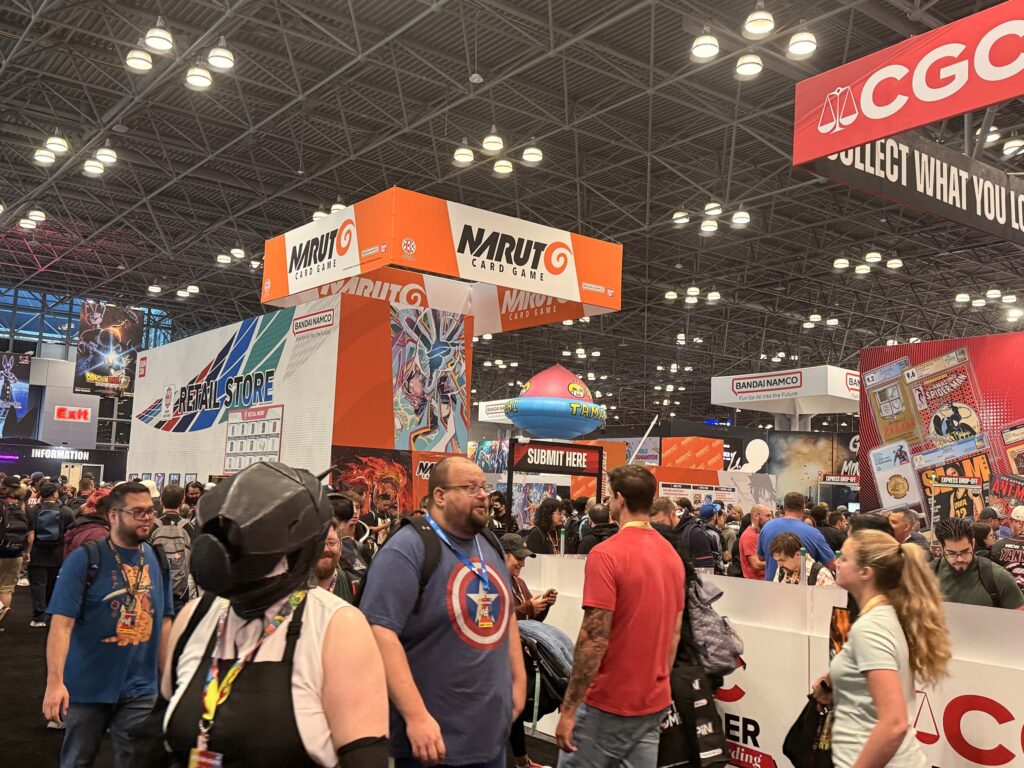
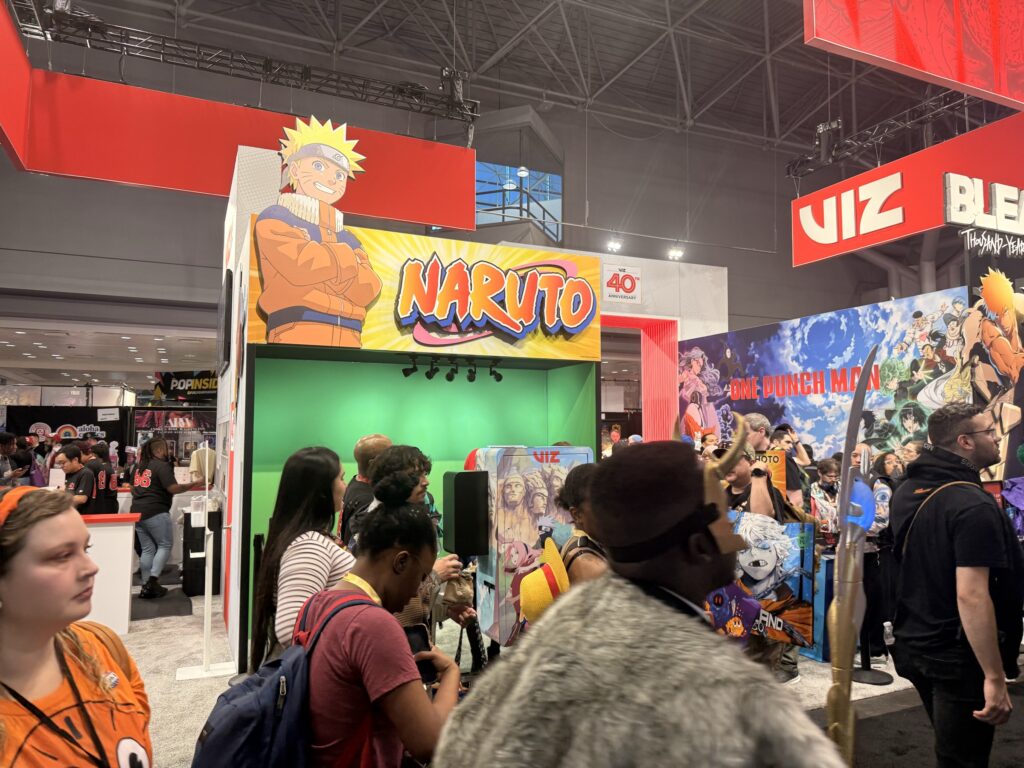
On the show floor, Naruto appeared across multiple booths around the main hall and was hugely popular with cosplaying fans.
Why did it stand out so much? I think it’s because the fanbase spans generations: the manga was serialized from 1999 to 2014, and Naruto Shippuden aired until 2017. Adults who grew up with it and younger fans who discovered it more recently filled the same room. NYCC’s crowd, with its many adult collectors, and the long history of a much-loved title were a natural fit.
The Guy She Was Interested in Wasn’t a Guy at All: One Line from Manga to Streaming
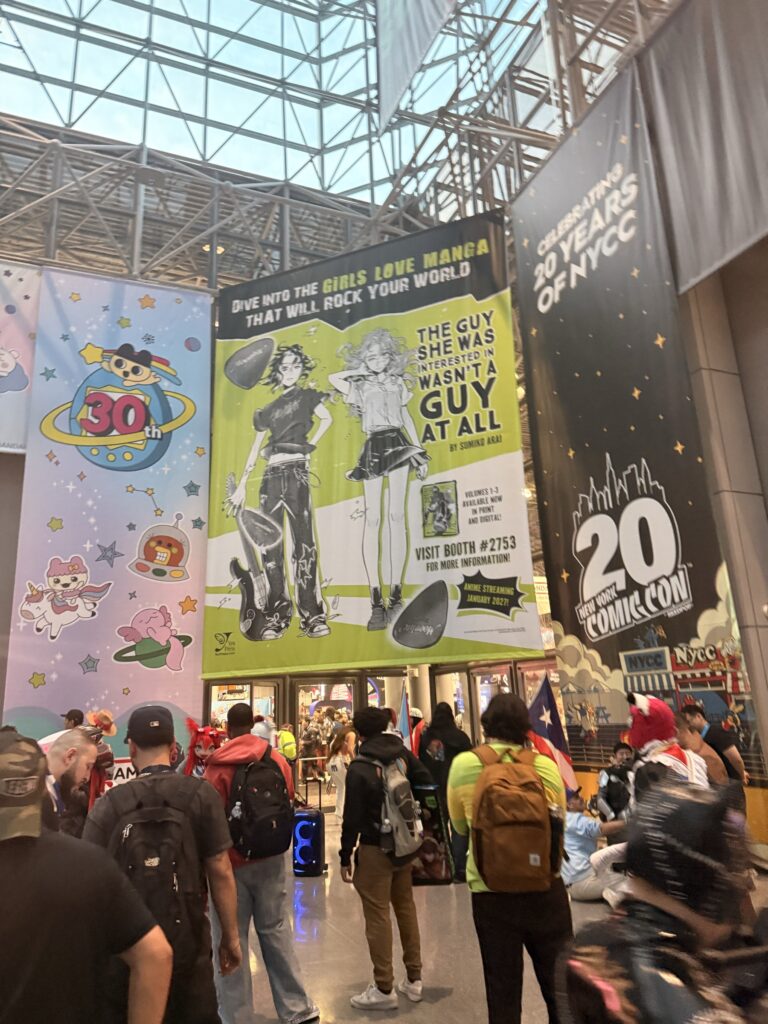
The title that stayed with me in a different way from Naruto was Sumiko Arai’s manga The Guy She Was Interested in Wasn’t a Guy at All. It was promoted at every step of a fan’s path through NYCC, and nearly all of it pointed to picking up the manga.
The entrance hall had huge banners from Yen Press, the English-language publisher. Pillars around the venue had Crunchyroll-branded wraps that also promoted the manga. There was a booth for the title, and it received a world-premiere trailer in Crunchyroll’s showcase. It was also part of a stamp rally that sent fans between the Yen Press and Kinokuniya booths, and the manga was featured throughout the Kinokuniya New York store.
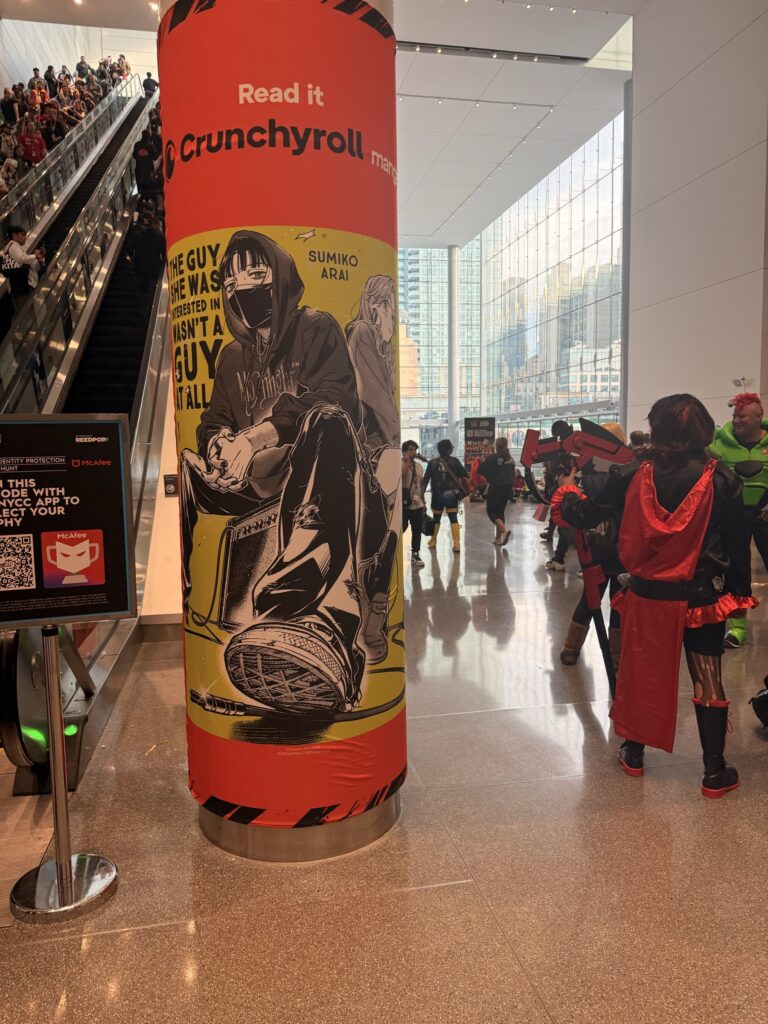
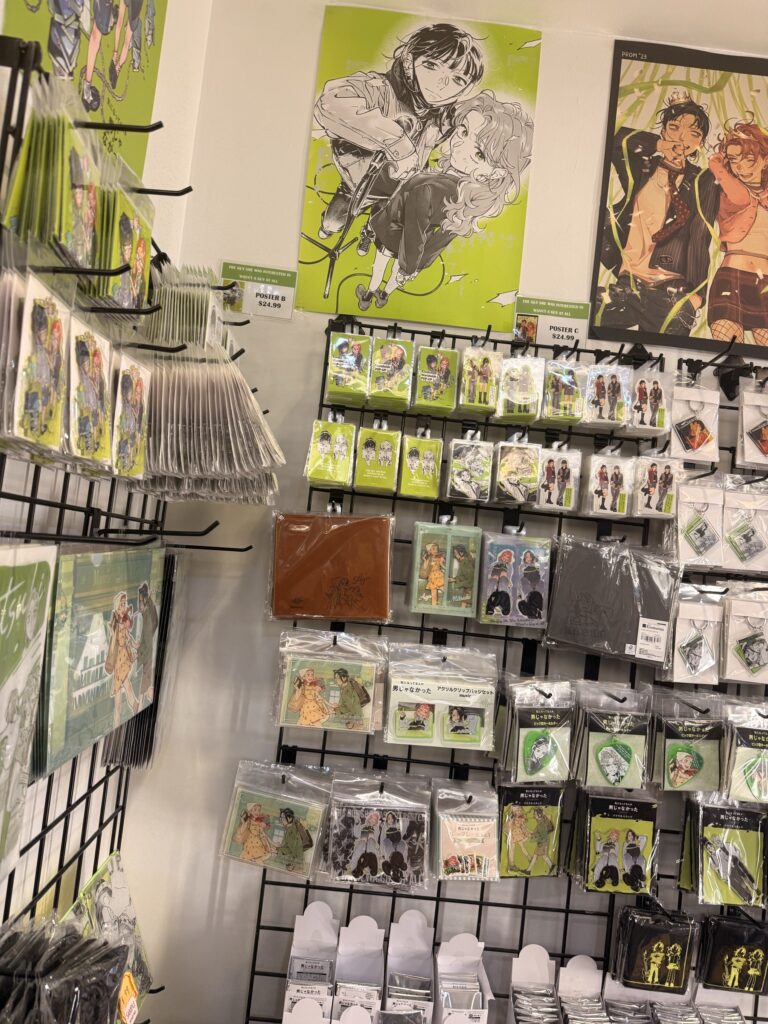
What made all of this work as one line was Crunchyroll’s carefully designed pathway to its new service. A fan who gets interested in the manga can read the first two volumes on Crunchyroll Manga. Then, when the anime premieres on January 8, 2027, they can watch it on Crunchyroll, with episodes streaming as they air. It felt like Crunchyroll was using its most visible venue space to sell the manga first. That makes reading the entry point to watching, and keeps the whole journey inside one platform.
GUNDAM: Starting with “What is GUNDAM”
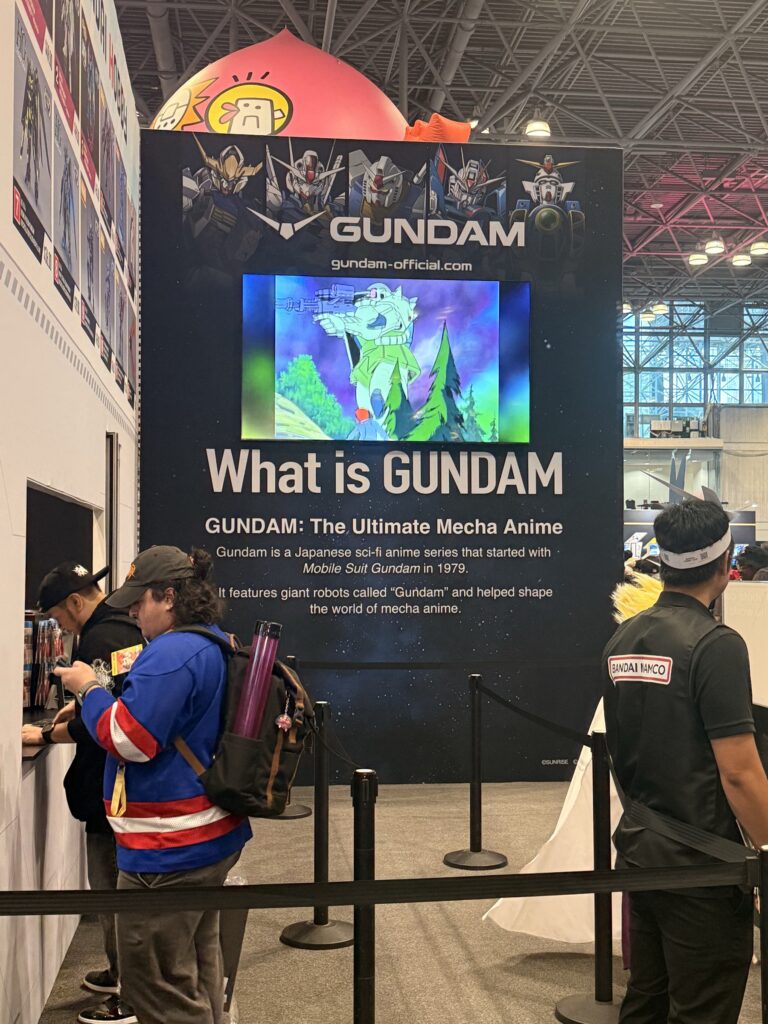
GUNDAM put the most effort into reaching new fans. Its booth had a huge “What is GUNDAM” panel explaining, with video, that it’s a Japanese sci-fi anime that began with Mobile Suit GUNDAM in 1979. You wouldn’t see a display like this at Anime Expo, where Japanese IP is everywhere. At NYCC, where many people don’t know the work, GUNDAM gave them a first step in.
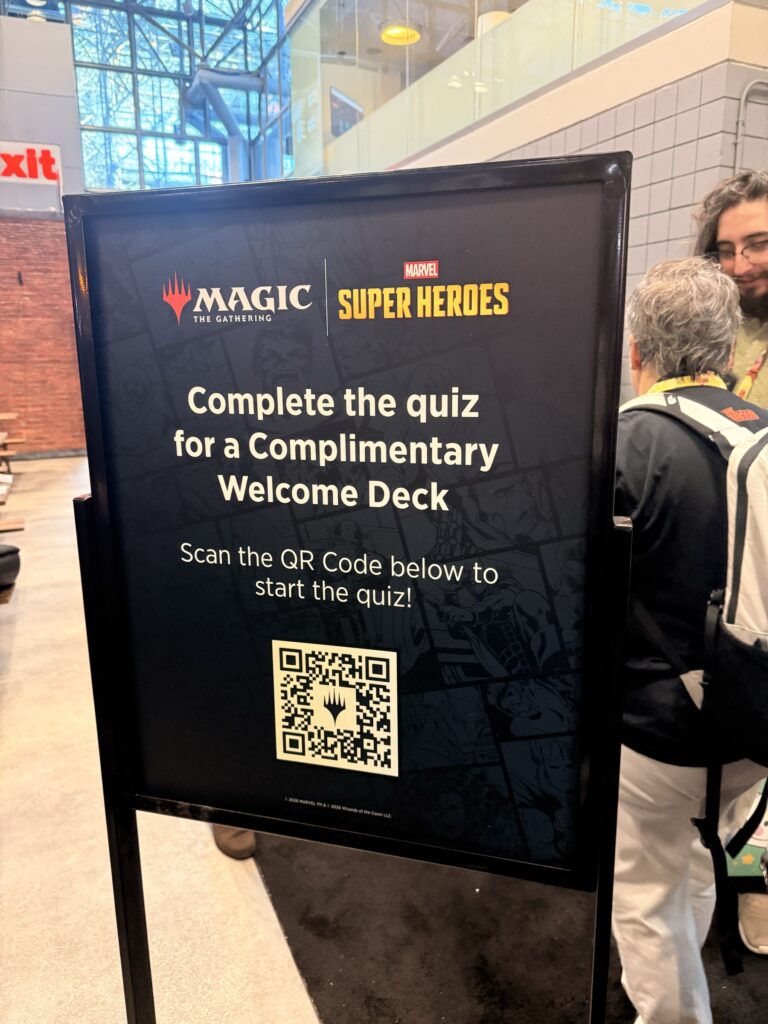
It isn’t Japanese IP, but the Magic: The Gathering and Marvel collaboration booth was also a useful example of reaching new customers. Answer a quiz via QR code and you get a free starter deck. The booth collected participants’ data, and fans were thrilled to walk away with cards. It’s data collection turned into a game.
Whatnot: Live Auctions Running in the Venue and on the App at the Same Time
Whatnot was where I felt the difference from Japan most strongly at this year’s NYCC.
Whatnot is a live-stream shopping platform where sellers present items on a live stream and viewers bid or buy on the spot. It’s often described as the largest live shopping platform in the United States, centered on collectibles like trading cards, comics and figures.
At NYCC, Whatnot took over more than 5,000 square feet with its “Whatnot Liveplex”: a shopping-mall-style collector marketplace with an arcade, live programming, exclusives and celebrity appearances. Sellers could go live from the floor even without their own booth, and all programming was streamed online through “Beyond the Con.” In other words, people who couldn’t make it to the venue could buy the same items through the app. According to Whatnot, it offered over 500 exclusive drops (items released in limited quantities or time windows) in person and on its app, and the activation was more than twice last year’s size.
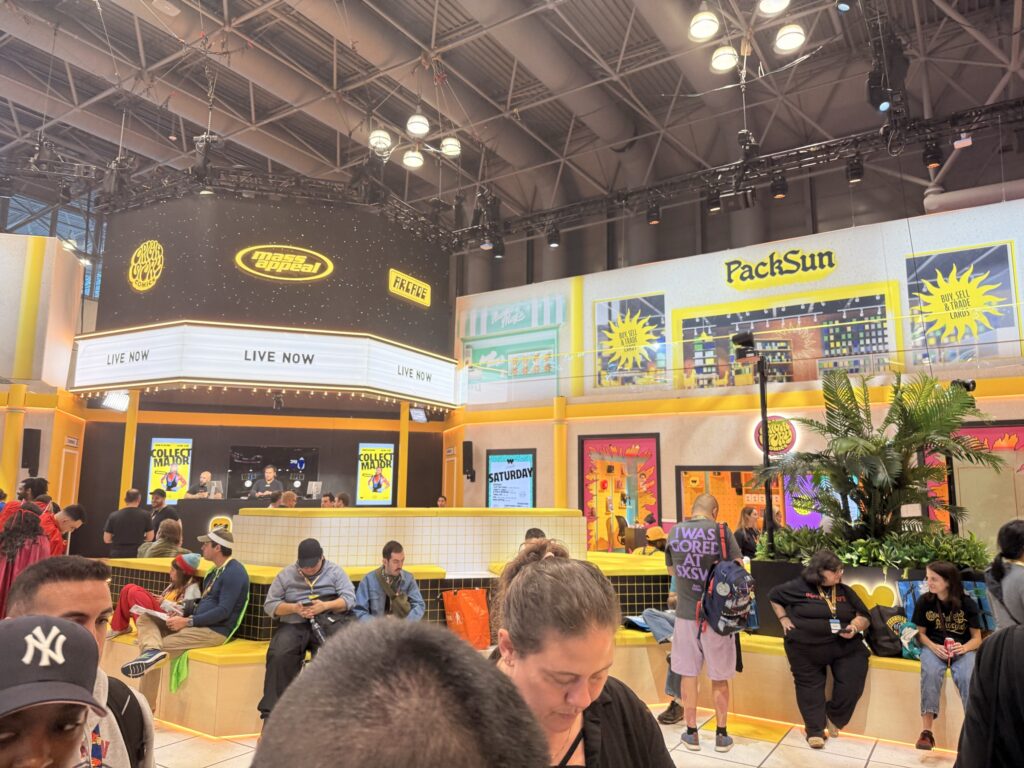
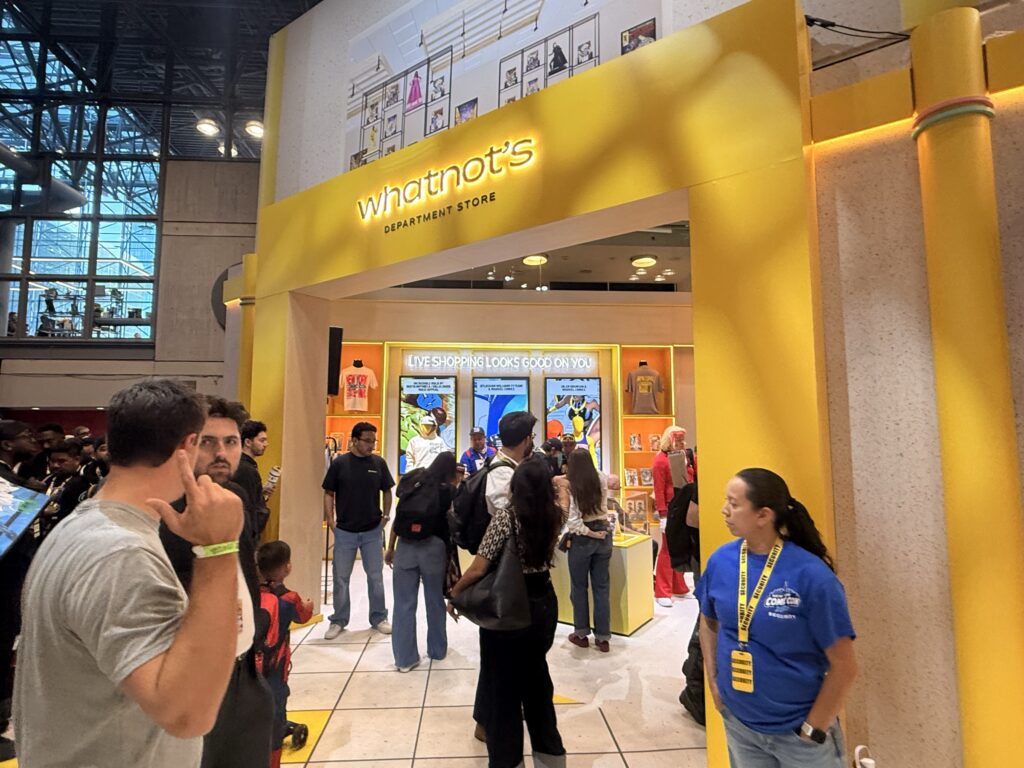
The exclusives were also designed with collector psychology in mind. An Amazing Spider-Man #1001 variant cover featuring Jalen Brunson of the New York Knicks was available only at the Liveplex, and blind-box figures had a rare “chase” variant in one of every six boxes. eBay Live also had a setup at the show, so live shopping was one of the visible themes of this year’s NYCC.
Selling by Designing Time and Queues
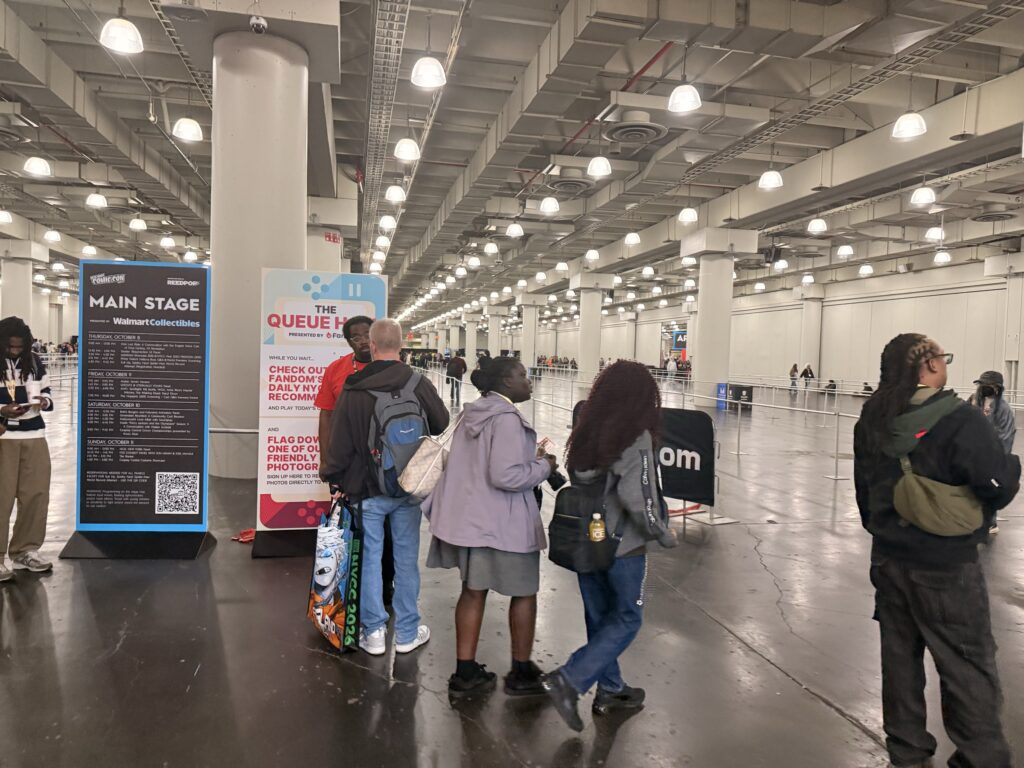
Many attendees spent their time in queues for signings, photo ops and timed drops, and spent their money on exclusives. What stood out was how carefully those queues and time slots were designed.
Mass Appeal scheduled celebrity-led releases in a 90-minute evening window, 5:30–7:00 p.m., each day. Thursday brought a sketch poster from Nas, Slick Rick and others; Friday, a special-edition Marvel comic from Anderson .Paak and Cordae; and Saturday, a reimagined Incredible Hulk #1 from Busta Rhymes, built around the work of the late producer J Dilla. Fixing the day and time concentrated demand into those windows and created long lines.
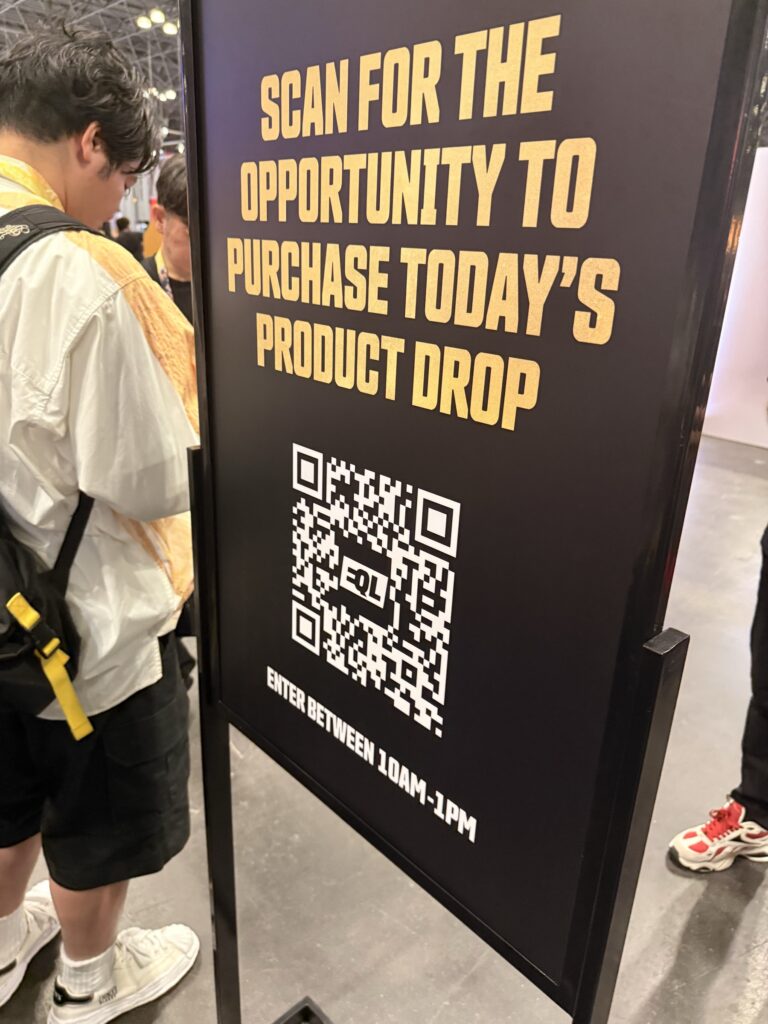
Another notable feature is that most slots for celebrity signings and photo ops are allocated before the show even starts.
VIP badges include priority access, and a Superfan membership gives early access to buy photo-op and autograph slots. Booth signings are ticketed too, designed as a premium experience: at one publisher, extra signatures cost $25 or more each.
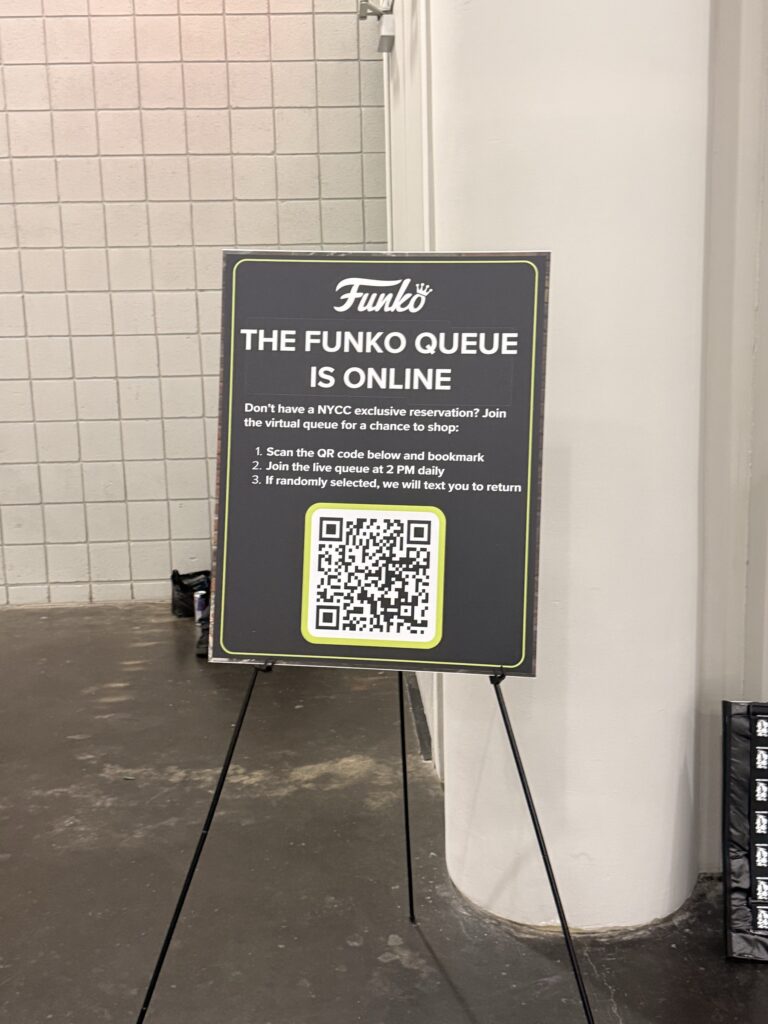
Moving the queue itself online is also catching on. Funko’s booth had a sign saying “THE FUNKO QUEUE IS ONLINE”, and people joined a virtual queue via QR code.
What Stood Out Compared with Japan
Comparing how things sold at NYCC with how they sell in Japan, three differences stand out.
First, the venue and the stream are storefronts at the same time. On Whatnot, people at the venue and people watching on the app compete for the same items at the same moment, so event attendance doesn’t cap sales.
Second, waiting time and queues are designed as part of the product. Organizers announce in advance what drops when, sell priority slots and move queues online. Waiting itself becomes part of the event experience.
Third, attendee data is collected in exchange for exclusives and freebies. Through QR code purchases and quiz entries, brands stay connected with the people they met at the show after it ends.
The bigger the fanbase, as with Naruto or The Guy She Was Interested in Wasn’t a Guy at All, the more it matters how you turn the interest sparked at the venue into streaming, purchases and the next touchpoint.
That said, what I’ve described here is only the visible side of the system. Running live auctions and designing pre-ticketed queues start from very different assumptions from the Japanese expectation that if you go to the venue, you’ll always get to experience the booth. Even at Anime Expo, first-come-first-served lines sometimes draw complaints. How to design queues and exclusives is one of the things NYCC has built real know-how around.
If you want to explore what your title could do, from North American event appearances and queue and exclusive sales design to operations during the show, talk to Adam Graham at Helixes USA directly. You can reach us through this form.
-
Text
Adam Graham (Helixes USA)
-
Translation / Edit
Kentaro Okumura
Tomoya Hyodo
Helixesへのお問い合わせはこちら Contact