

What I Saw Walking NYCC: How It Differs from Anime Expo. Where Should Japanese IP Exhibit?
2026.10.28
One of the most common questions Helixes USA gets from companies looking to grow Japanese anime and manga in North America is: "Should we exhibit at Anime Expo or New York Comic Con (NYCC)?" Adam Graham attended both Anime Expo in Los Angeles in July 2026 and NYCC in New York from October 8 to 11. Here he looks at the differences beyond attendance figures, and what to think about before deciding to exhibit.
この記事は、日本語のものを英訳しています。→ 日本語記事はこちらから


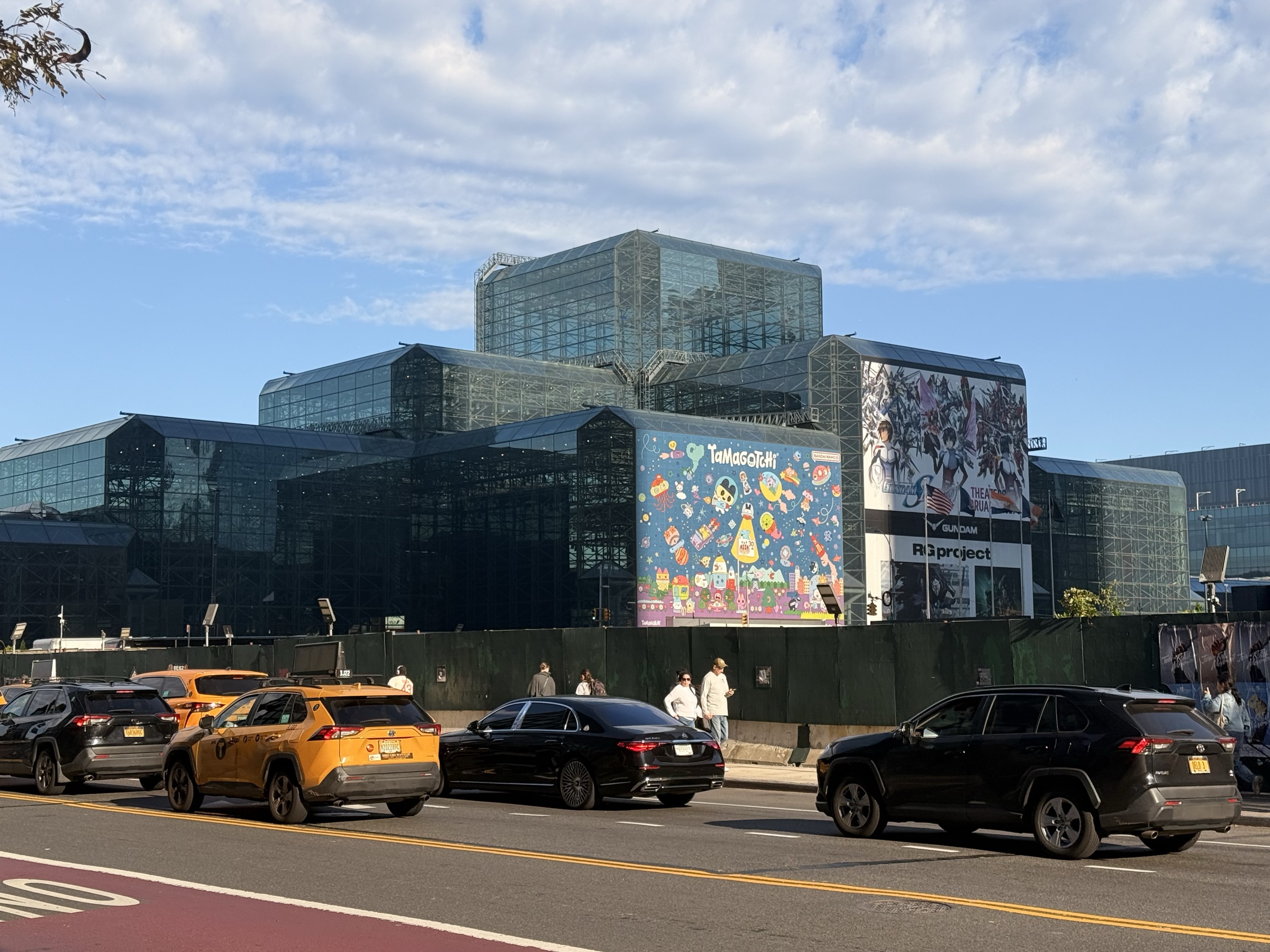
The Javits Center, home of NYCC. Tamagotchi and Gundam visuals lined the outer walls facing the street.
NYCC Is the Real Deal
The moment I walked into NYCC, I thought: this is the real deal. Anime Expo, run by a nonprofit that fans have built up with their own hands over many years, has a fan-made, DIY feel. NYCC, which the events company ReedPop started in 2006, carries a different kind of weight, with major studios and big names everywhere. This year, guests included Hayden Christensen and Nicolas Cage, and at the Whatnot booth, members of the Fugees performed on the spot. It’s a mainstream event where A-list Hollywood names show up as a matter of course.
On attendance, Anime Expo 2026 reported turnstile attendance of more than 422,000, and NYCC more than 250,000. But NYCC doesn’t publish how it counts, so these two numbers can’t tell you which show is bigger. Walking both venues, what struck me most was a difference that doesn’t show up in the numbers. The crowds were completely different.
Anime Expo: A Younger, Anime-Native Crowd
Anime Expo’s crowd is young, mostly people who grew up watching anime. It’s very cosplay-driven, and excitement is concentrated almost entirely on anime. Japanese anime and manga IP is everywhere on the floor, and attendees walk the show expecting it.
That makes it a very efficient place to deliver new titles and sequel announcements to fans who already know the work. On the other hand, almost everyone there is already into anime. Fans may discover another title next to the one they came for, but there aren’t many moments where someone who doesn’t usually watch anime stumbles across Japanese IP.
NYCC: Adult Collectors Who Value History and Status, Mixed with Families
My first impression of NYCC was how broad it was: comics, TV, film, games and anime spread across the whole Javits Center. The crowd was older than Anime Expo’s and more mixed: families, adult collectors and casual fans without a strong attachment to any one title. Excitement was spread across many franchises.
Here, Japanese IP is one genre among many, and plenty of people encounter a title for the very first time in front of the booth. That’s the biggest difference from Anime Expo, and it’s also the reason to exhibit at NYCC.
A Collector Culture That Puts a Price on Back Issues and Long Histories
Spending was different too. At NYCC, it seemed to lean toward collectibles, prints and exclusives over small impulse items. Even in Artist Alley, where artists sell their own work, purchases appeared to be signed collectibles from fans’ favorite artists rather than items paying homage to favorite IPs.
Walking the floor, you see comics graded by third-party services and sealed in cases, shelves packed with back issues going back decades, and variant covers for collecting every cover of the same issue. The auction house Goldin had a sign inviting people to talk about “grails,” the rare pieces collectors spend years hunting for. Being an old issue, a first printing or part of a long-running series carries a price in itself, and what you own becomes a mark of status.
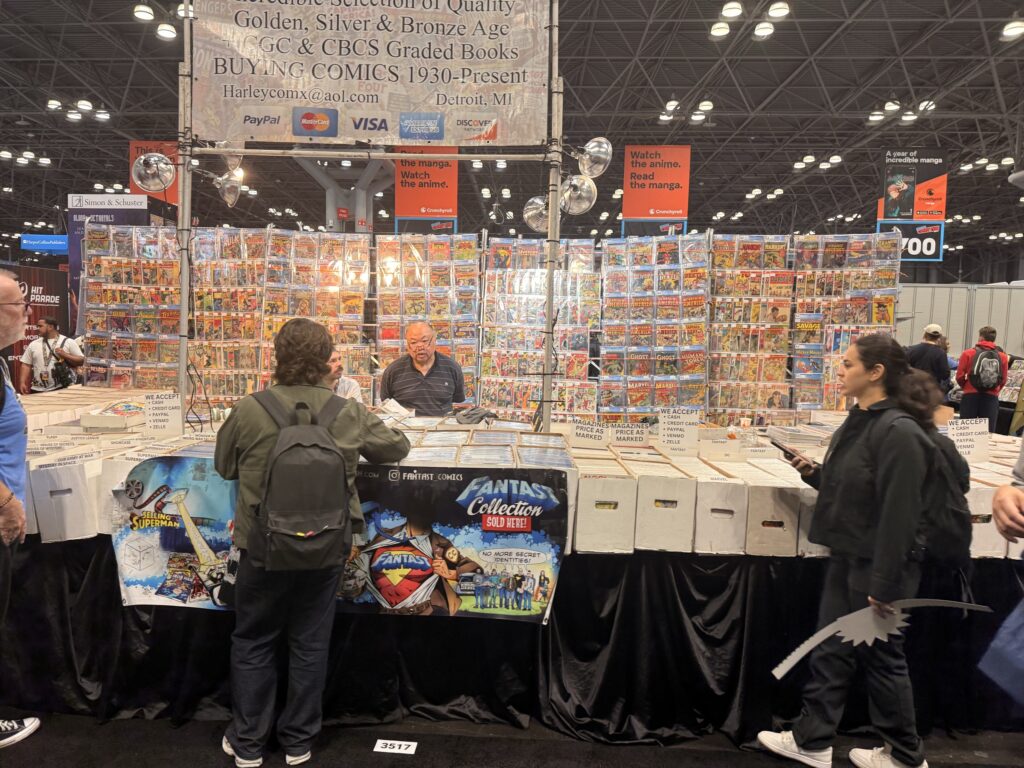
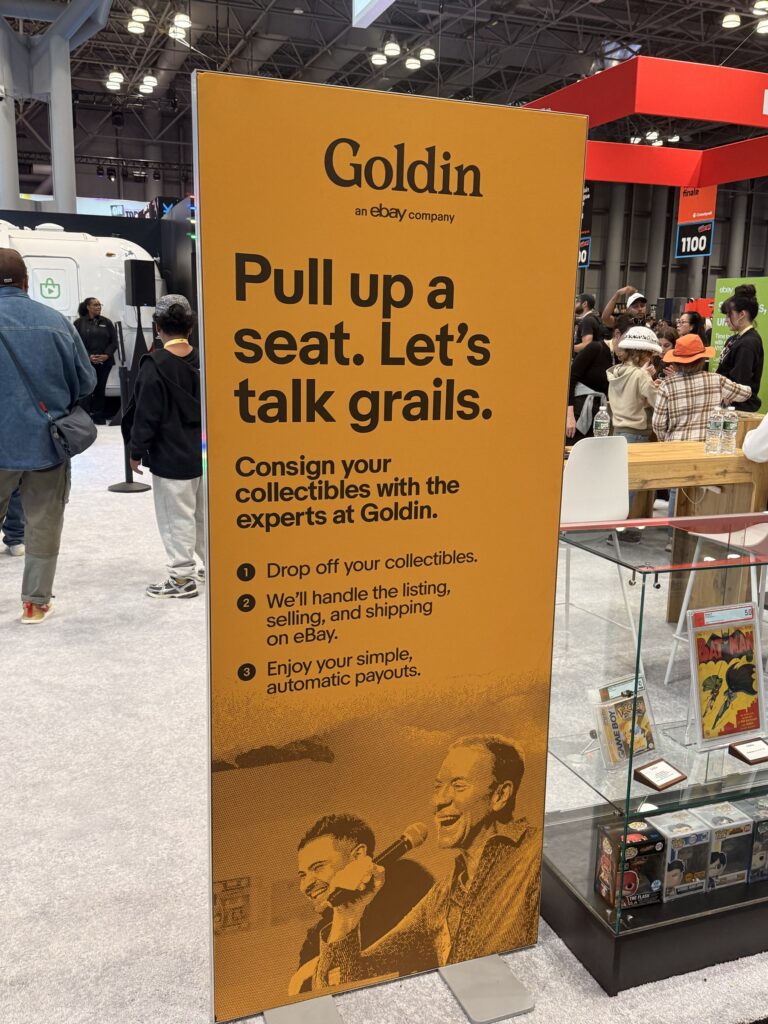
An auction house exhibiting at all is something you’d rarely see at Anime Expo. Auctions are the most obvious form of resale, but here resale isn’t the bad guy. As items get priced and keep changing hands, the value of the work and its world keeps growing, and auctions are accepted as part of that system.
A symbolic example was Mass Appeal and Marvel’s special edition of Incredible Hulk #1, a variant cover built around the work of Busta Rhymes and the late producer J Dilla. It was about $30 a copy. It’s an official Marvel release, yet it was also being sold inside the Whatnot booth, the live auction platform. I think Marvel made this issue fully expecting it to be bought and sold among collectors afterward.
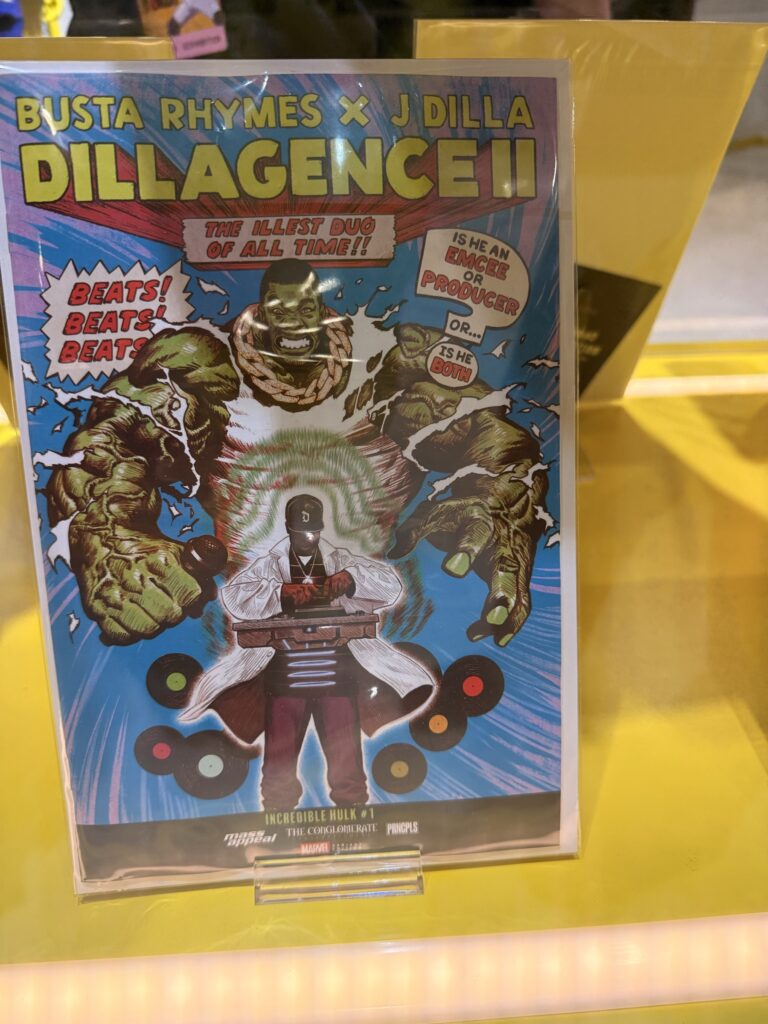
Resale and collaborations across genres are the soil that grows an IP’s value. Walking NYCC, I feel comfortable saying that outright.
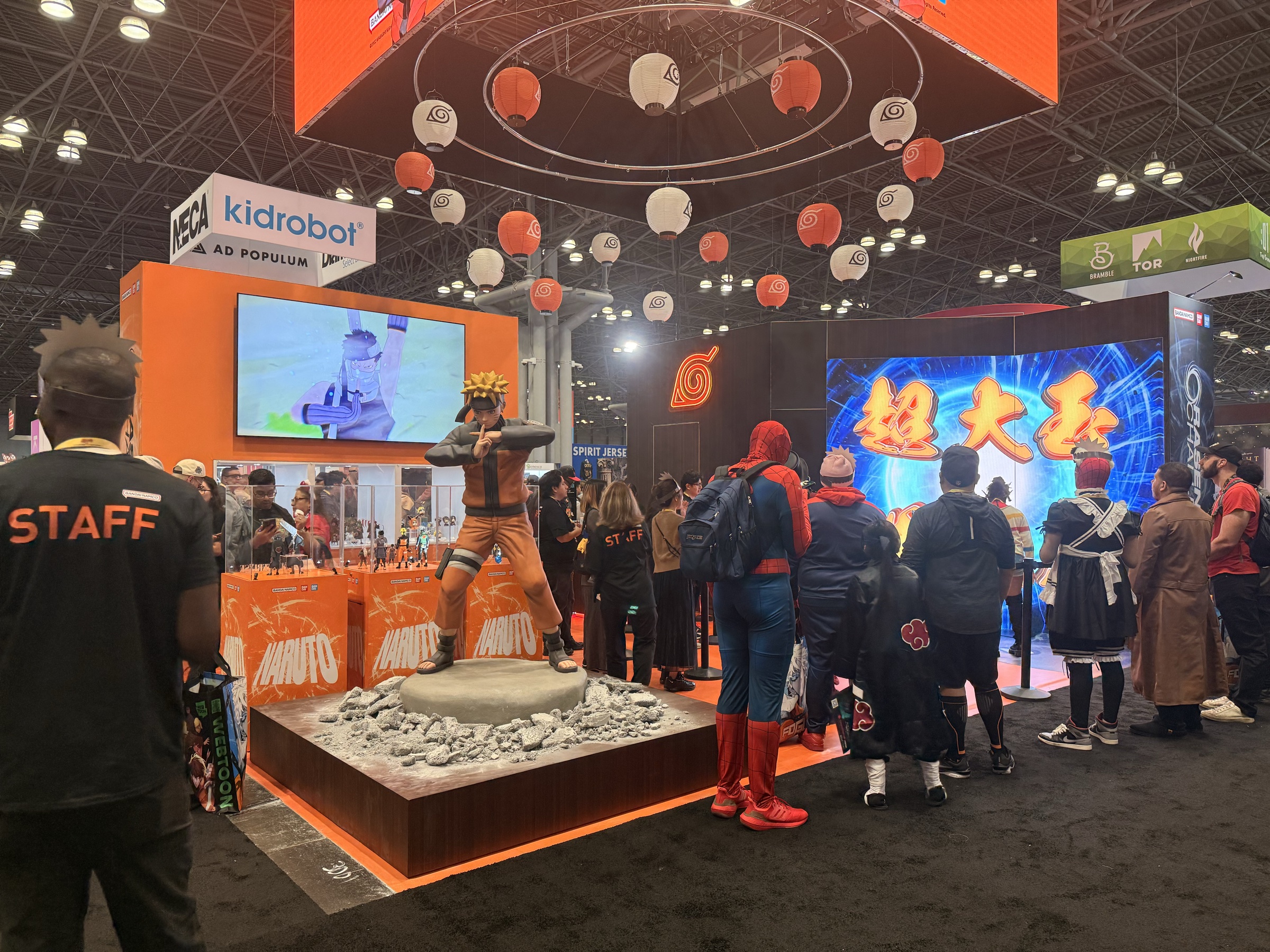
This works in favor of Japanese IP with a long history. Naruto, which was at NYCC this year, began as a manga serialized in 1999, and Gundam’s first TV series aired in 1979. That long history comes across as value in itself to NYCC attendees. At this show, presenting a title’s timeline or early materials means more than just explaining the product.
Perhaps it’s time for licensing and brand management to move from dividing the world into “Japan and everywhere else” to thinking region by region. In New York, the clues are in the culture of the city itself.
New York’s Culture Comes Into the Venue
I also felt like the culture of New York was interwoven into the event. Obviously famous IPs like Spider-Man have New York as a backdrop, but what really stayed with me this time was the booth and pop-up store run by hip-hop media company Mass Appeal. Artists like Nas and Busta Rhymes released exclusive comics and prints there, and NY hip-hop culture came together with comic book culture in one place. It was one of the most exciting spots on the floor.
You could feel, all over the venue, that these partnerships were built on a real understanding of New York hip-hop culture.
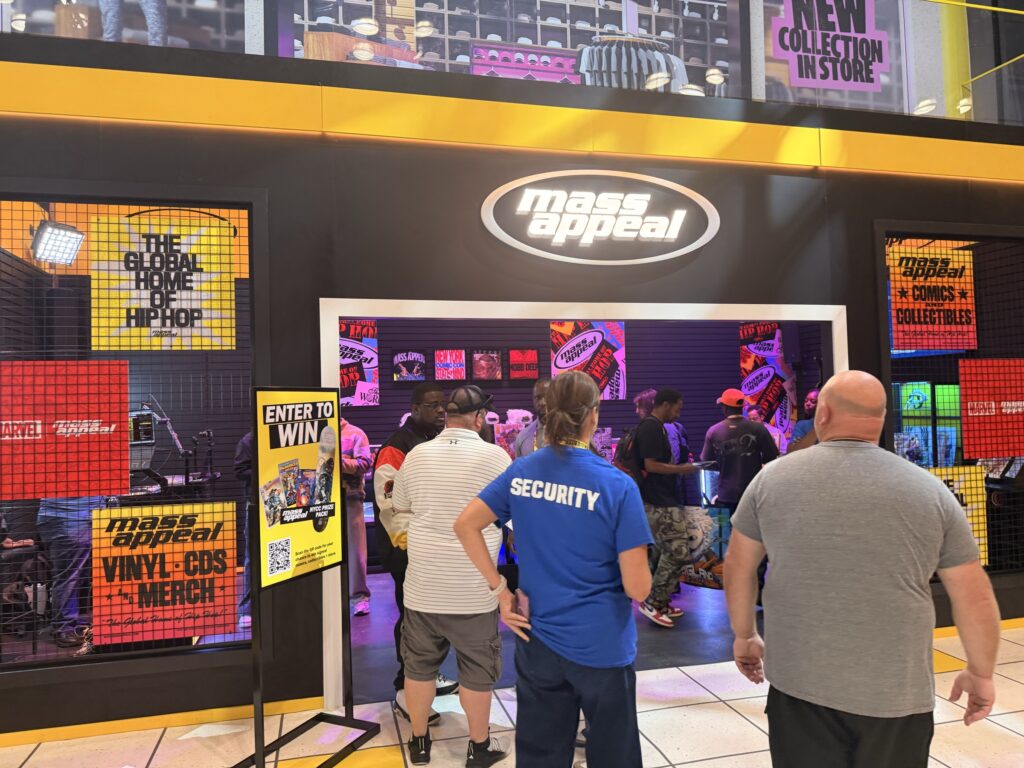
If Anime Expo is a show for anime fans, NYCC is a place where the city’s many cultures meet. It’s worth thinking about how Japanese IP can become part of that mix.
How to Decide Where to Exhibit
Given these differences, the decision is simple. If you want to deliver new titles or sequel announcements to fans who already know the work, choose Anime Expo. If you want casual fans and families who don’t know the work yet to experience it for the first time, choose NYCC.
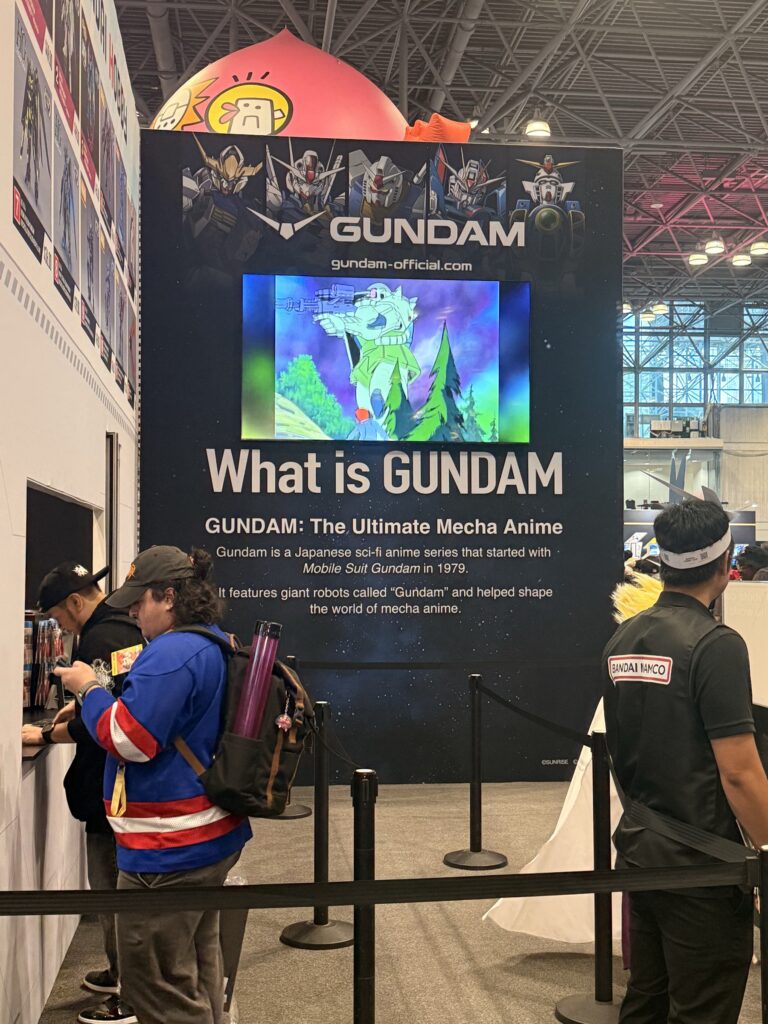
Gundam handled this best. Its booth had a huge panel titled “What is GUNDAM”, explaining with video that it’s a Japanese sci-fi anime that started in 1979 and helped shape the giant robot genre. You wouldn’t see a display like this at Anime Expo, where Japanese IP is everywhere, but I think it was a great idea for NYCC.
What to Prepare If You Exhibit at NYCC
If you exhibit at NYCC, I’d recommend treating it as a discovery and relationship show, not an anime-only show.
In practice, prepare one announcement or US-first moment, and pair it with talent, an English-first panel and a hands-on element. Line up US partners in streaming, bookstores and retail in advance, so anyone who gets interested on the spot can take the next step immediately. Use the days around the show for press, retailer and licensing meetings. Plan quantities of exclusives and queue operations with a local team beforehand, and bring someone from Japan who can make decisions on site.
Japanese IP Spotted at NYCC 2026
Here are the Japanese IPs that had a strong presence this year. Naruto, a title loved for decades, drew big crowds, with a packed main-stage panel that teased a new manga and announced a worldwide card game release, among other things. The manga The Guy She Was Interested in Wasn’t a Guy at All was promoted all over the venue, from huge banners in the entrance hall through to streaming. Gundam had the explainer panel I mentioned above, and across the street Kodansha ran Kodansha House. Visuals for Tamagotchi, celebrating its 30th anniversary, also hung on the outer walls and at the entrance.
What these titles were doing at the show, and sales methods you rarely see in Japan, like Whatnot’s live auctions, are covered in detail in the next article.
Go Once and See It for Yourself
This year I went to a lot of events: Tokyo Game Show in Japan, Anime Expo in LA, PAX in Seattle and more. NYCC was different from all of them.
NYCC shows how large the general US audience is for Japanese IP. The opportunity is less about speaking to existing anime fans and more about letting new fans touch the work. Pick the one moment where people meet your title, make it hands-on, and connect it to where people can watch or buy afterward. And before you plan, go once and see the show with your own eyes.
Helixes USA can support you with planning North American event appearances, coordinating with local partners and running operations on site. You can reach us through this form.
-
Text
Adam Graham (Helixes USA)
-
Translation / Edit
Kentaro Okumura
Tomoya Hyodo
Helixesへのお問い合わせはこちら Contact